
Languages at Mac.Rob: June Update.
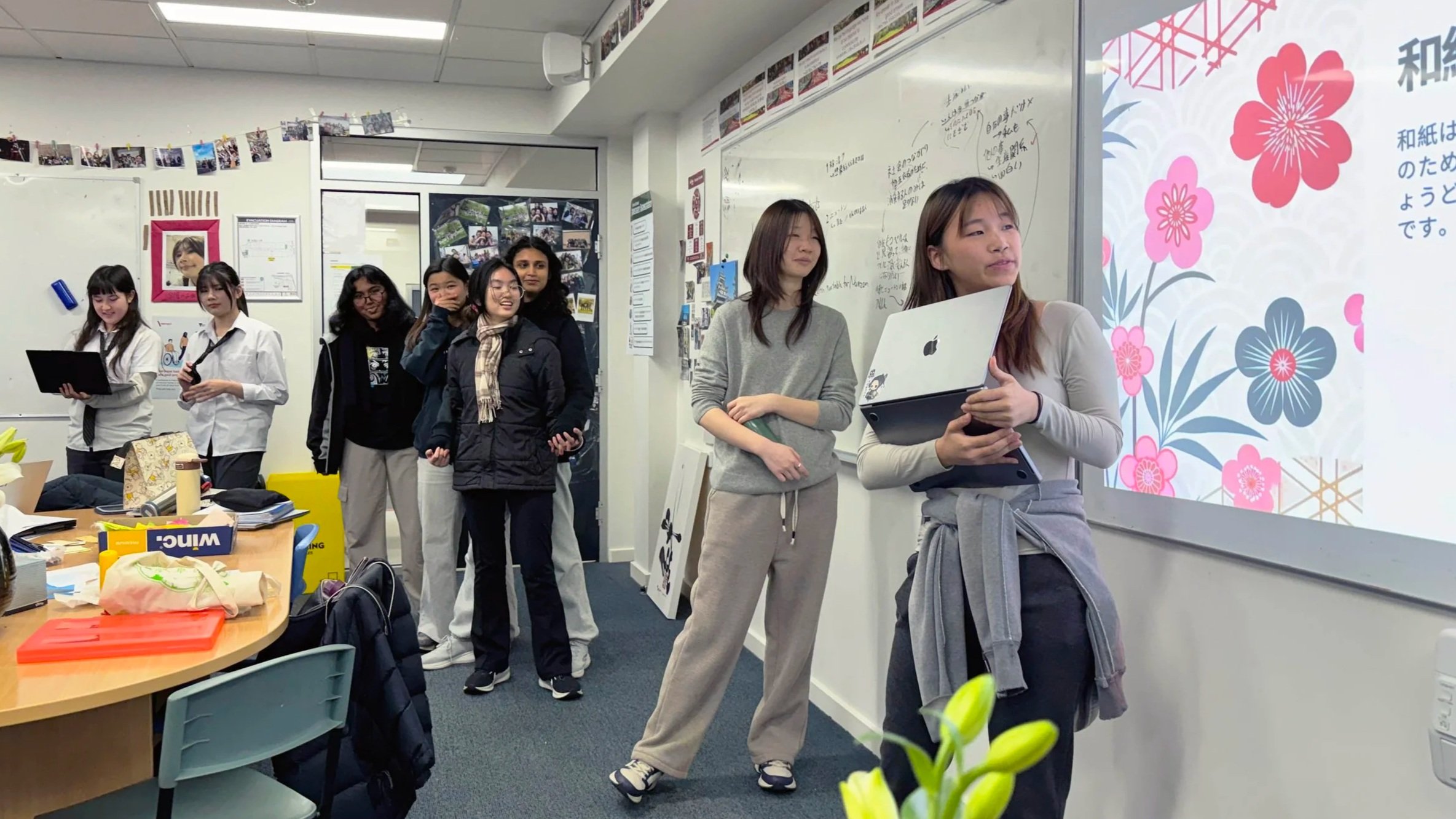
Japanese Washi Incursion.
Learning Through Culture, Craft, and Challenge
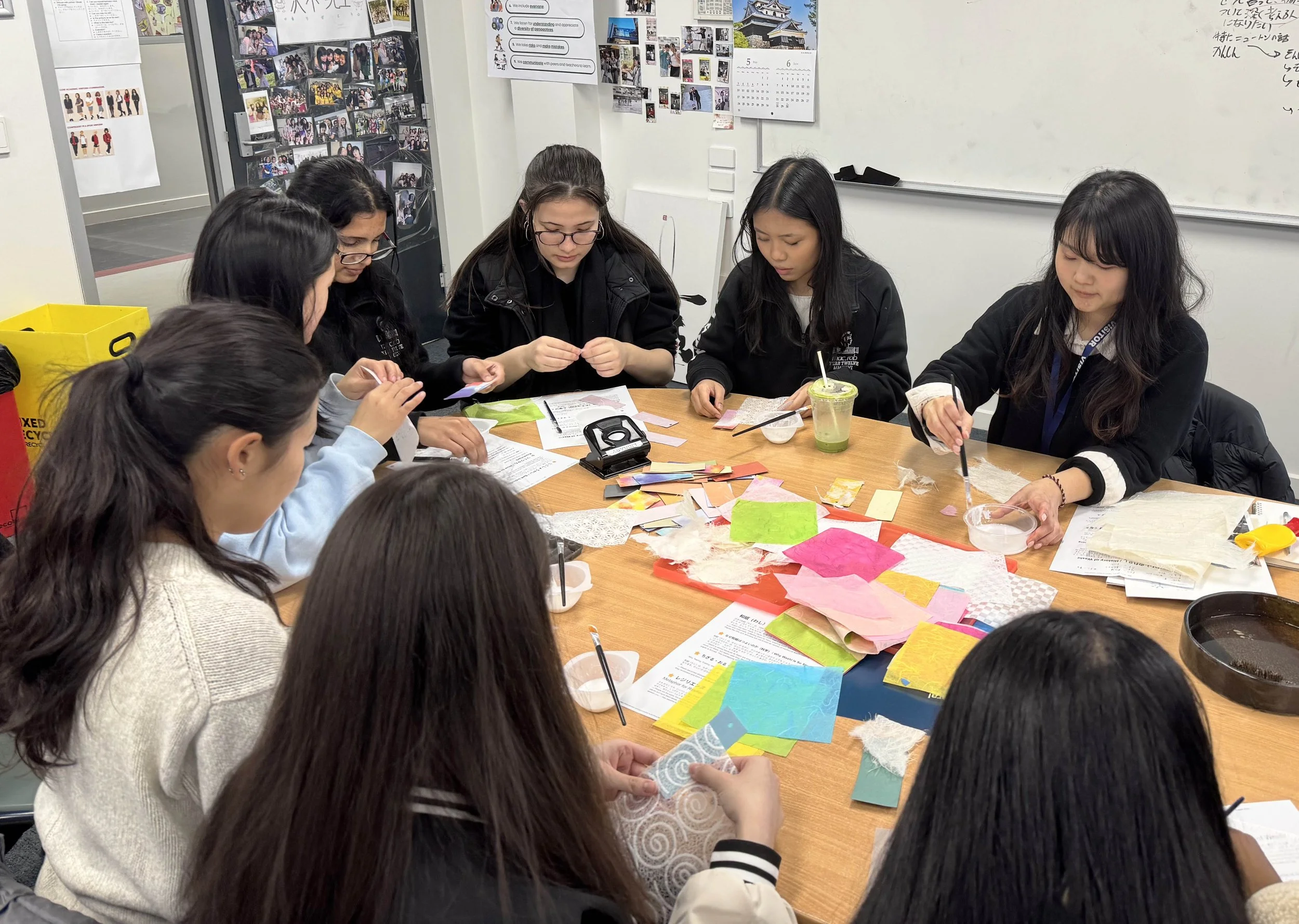
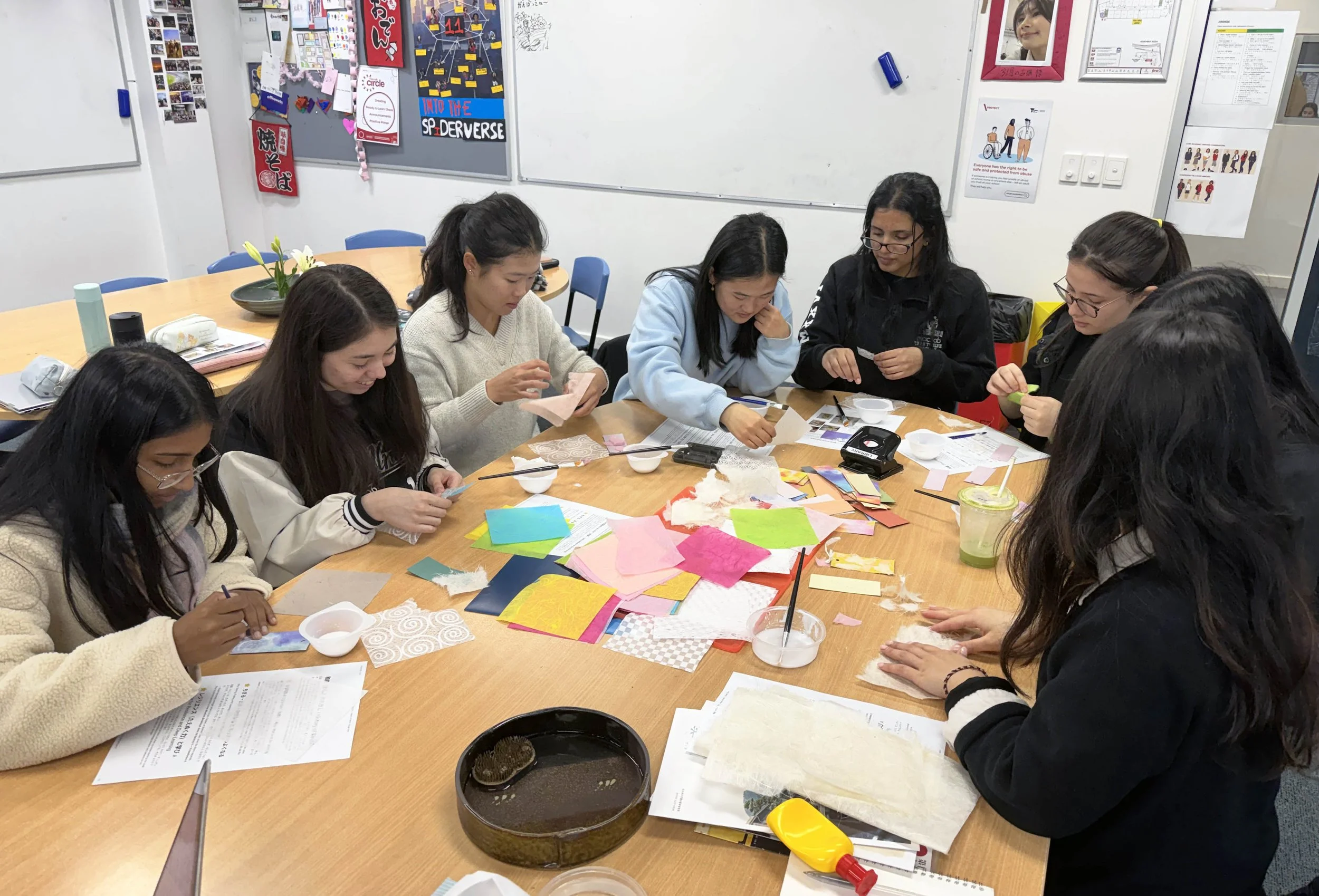
On June 4th, our Japanese students took part in a unique and meaningful Washi (traditional Japanese paper) workshop led by Neinei Sensei. While students enjoyed creating their own handmade washi bookmarks, the experience offered far more than a cultural craft activity. It became a lesson in how learning itself works, and how we grow stronger through challenge.
Students learned that washi is made from the fibres of the mulberry tree. These fibres are first broken down, then washed, separated, recombined, and strengthened as they are layered together. The result is a paper that is far more durable than ordinary paper: Flexible, resilient, and built to last.
This process became a powerful metaphor for learning. Just as mulberry fibres must be softened, stretched, and re‑formed, deep learning requires us to break ideas into smaller pieces, examine them closely, and rebuild new understanding. Students recognised that the moments when learning feels difficult - when they are “in the learning pit” - are not signs of weakness. They are the very fibres that make their thinking stronger.
As one student reflected, understanding how washi gains its strength helped them appreciate the value of being challenged: “Washi is stronger because it is broken down first. Learning is the same - you become stronger when you work through struggle.”
This philosophy mirrors a Japanese idea of resilience: People are the same. You cannot learn everything at once, but when you break learning into small pieces and layer them slowly, it becomes strong and lasting knowledge. Mistakes and setbacks do not weaken you - they become new fibres that make you stronger.
Students left the workshop not only with a beautiful bookmark, but with a deeper appreciation of Japanese culture and a renewed understanding of what meaningful learning looks like: Slow, layered, reflective, and strengthened through challenge.
A sincere thank you to Nene Sensei for guiding our students through such a rich cultural and educational experience.
Mr. Shungo Sawaki
Leading Teacher (International Baccalaureate, Assessment, Reporting & Data Use)
Through this workshop, we were able to make our own washi bookmarks, giving us first-hand insight into Japanese culture we often learn about in class. We were also able to learn about how Washi is made, its importance, and its philosophy that could be applied to our own lives. For example, learning about how mulberry tree fibres are meshed together to make washi helped many of us understand the importance of strength through teamwork.
Personally, I thought that Washi’s durability was interesting. In order to be made, ingredients are broken down and then rebuilt, forming washi which is significantly more durable than regular paper. This helped me to realise the importance of being challenged when learning new things in order to ultimately improve (entering the learning pit, we could say).
Overall, this was an incredibly valuable experience for all our Japanese students. Not only did we walk away with our own bookmarks, we walked away with a deeper understanding and appreciation for Japanese culture and its many applications to our daily lives.
Sakina K (12A)
Indonesian Language Excursion.
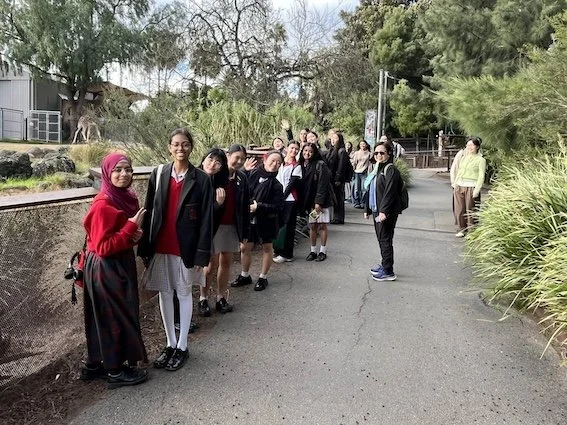
On June 12th, the Indonesian VCE classes went to Melbourne Zoo and later to Kantin, an Indonesian restaurant! Being at Melbourne Zoo gave us the opportunity to learn about many animals, birds, and environmental sustainability - particularly about orangutans, habitat loss, and the dangerous effects of palm oil plantations. Orangutans are a species of animal endemic to Indonesia, yet whose population number is significantly dwindling. Andrew, a Zoo educator, talked to us about the dangerous effects of our human behaviours towards animals and left us feeling amazed at their humanity; animals that can make tools, negotiate items of value, and have even escaped Melbourne Zoo before!
We later made our way to Kantin on Lygon Street for a delicious lunch, then to Beku Cafe for gelato, made from innovative Indonesian flavours such ‘Tolak Angin’ (an Indonesian medicinal remedy), and ‘Teh Tarik’ (a tea widely popular within the region in Malaysia).
At Beku, students were encouraged to use Indonesian when asking to sample different flavours and when ordering their gelato. The staff member was impressed by how confidently the students communicated in Indonesian, and pleased to see them applying their language skills in a real-world setting. Ultimately, the day was incredibly enjoyable and a well needed break following the end of our SAC season!
Maryam S